It was the last night of the International Temperate Reefs Symposium in Brest, France, when RLS Cofounder Rick Stuart-Smith plonked a transect reel and a pile of RLS datasheets down on the dinner table next to my decadent glazed duck breast. My mission, should I choose to accept it: a special delivery to Reykjavik for Shenae Willis, veteran RLS diver and recent arrival to Iceland. Shenae was eager to fill a gap on the RLS survey map and find out what was living in the waters of her new home.
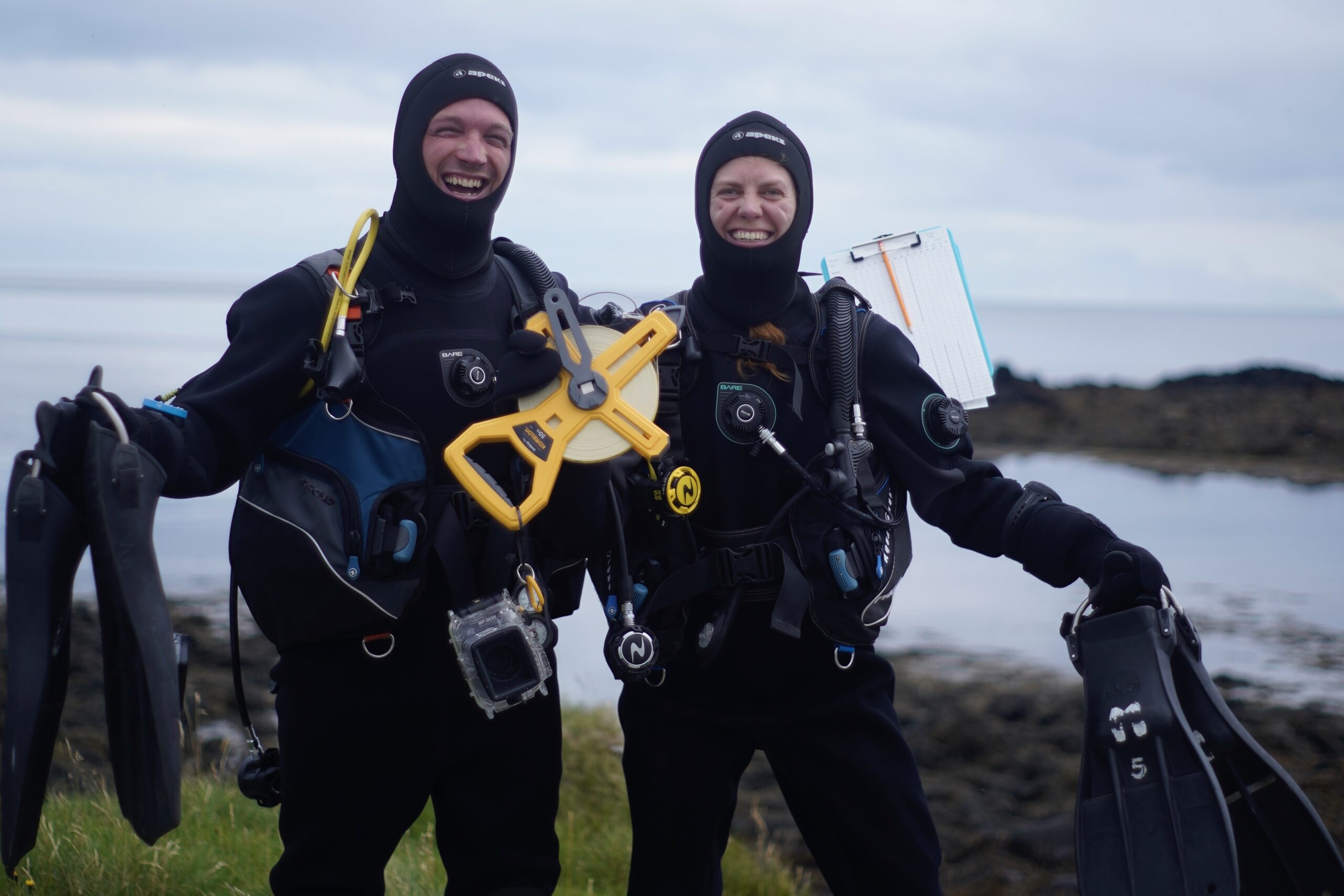
Twelve days later, I’d made it to Iceland and together with my trusty travel companion, Oscar Martin, we stood outside a dive shop somewhere amongst the warehouses and docks of Reykjavik, with the precious transect and a few clipboards we’d picked up to serve as last minute dive slates. We were meeting Shenae at DIVE.IS where she’d spent the day guiding divers at Silfra, the continental fissure renowned for its incredible visibility. And thanks to Shenae and the people at DIVE.IS, we had access to a van and all the dive gear needed to head out for a survey.
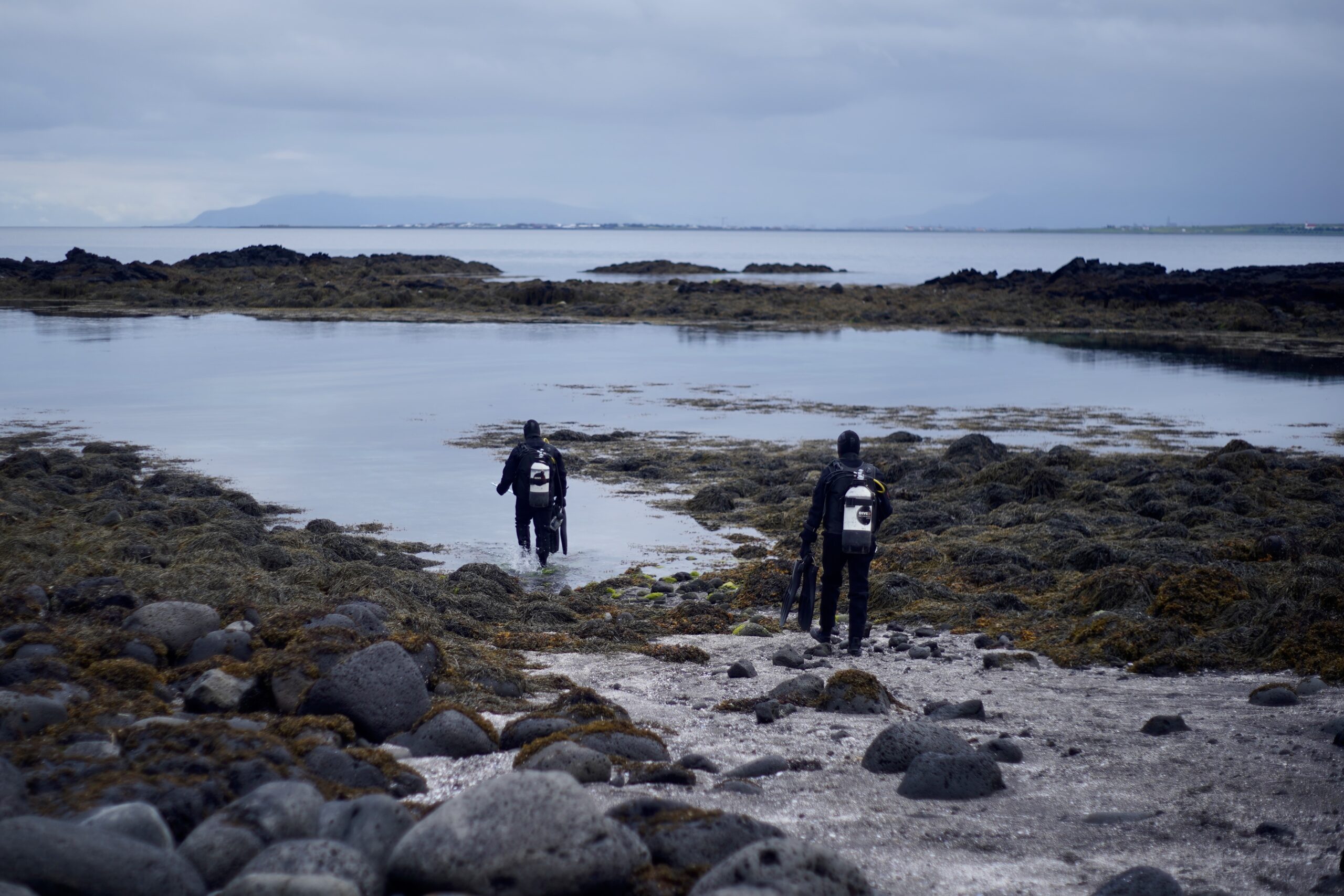
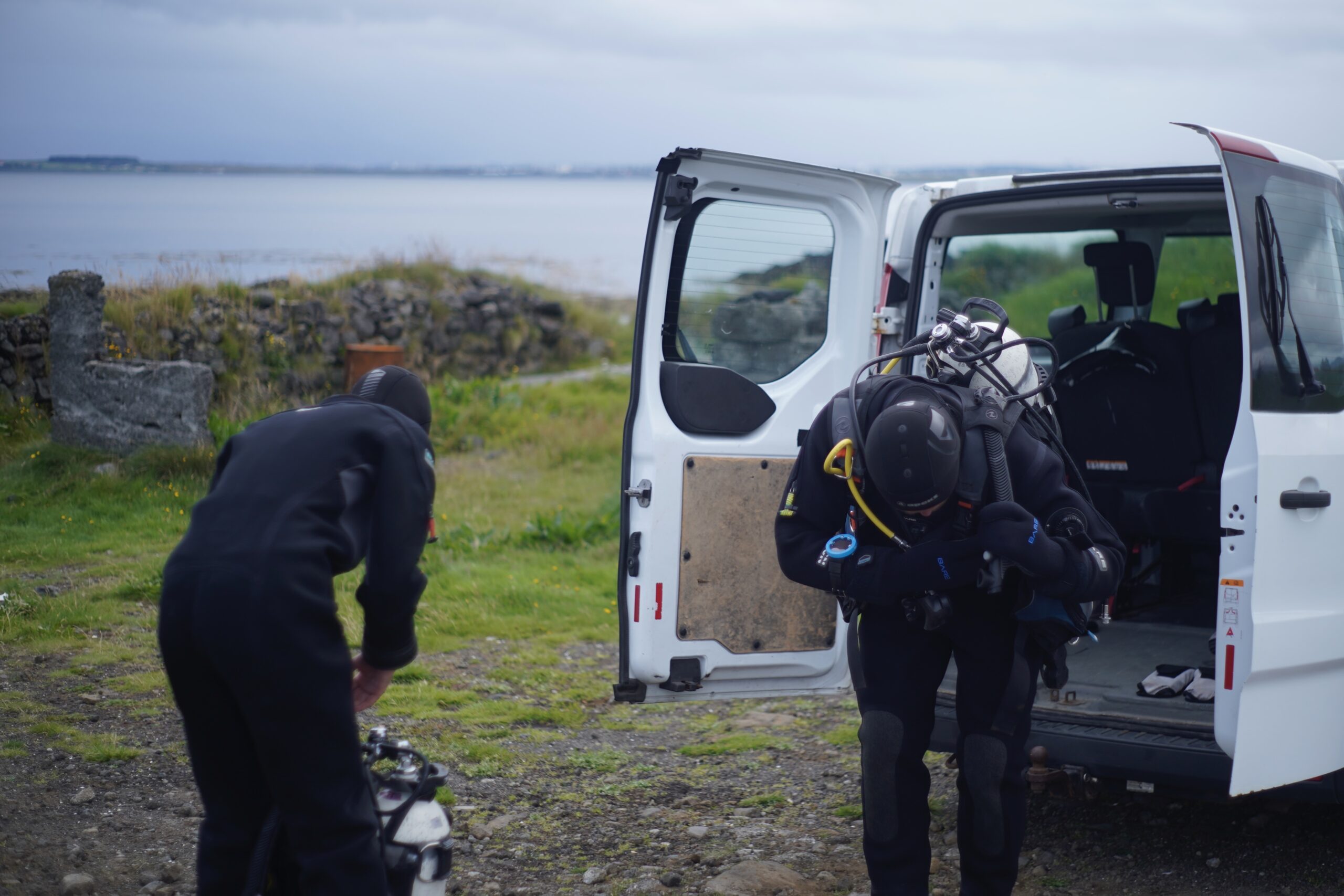
With the van loaded we headed south of Reykjavik to a rugged volcanic beach at the end of a long dirt road; a dive site called Óttarsstaðir. The sun was getting lower in the sky and bringing the kind of perpetual dim grey of Icelandic summer evenings. As we scouted our entry and geared up for the dive we were approached by a mysterious benefactor, out for an evening stroll with his adorable dog Bella. As it turned out, he was a local fisherman with some useful insights about the dive site and marine life.
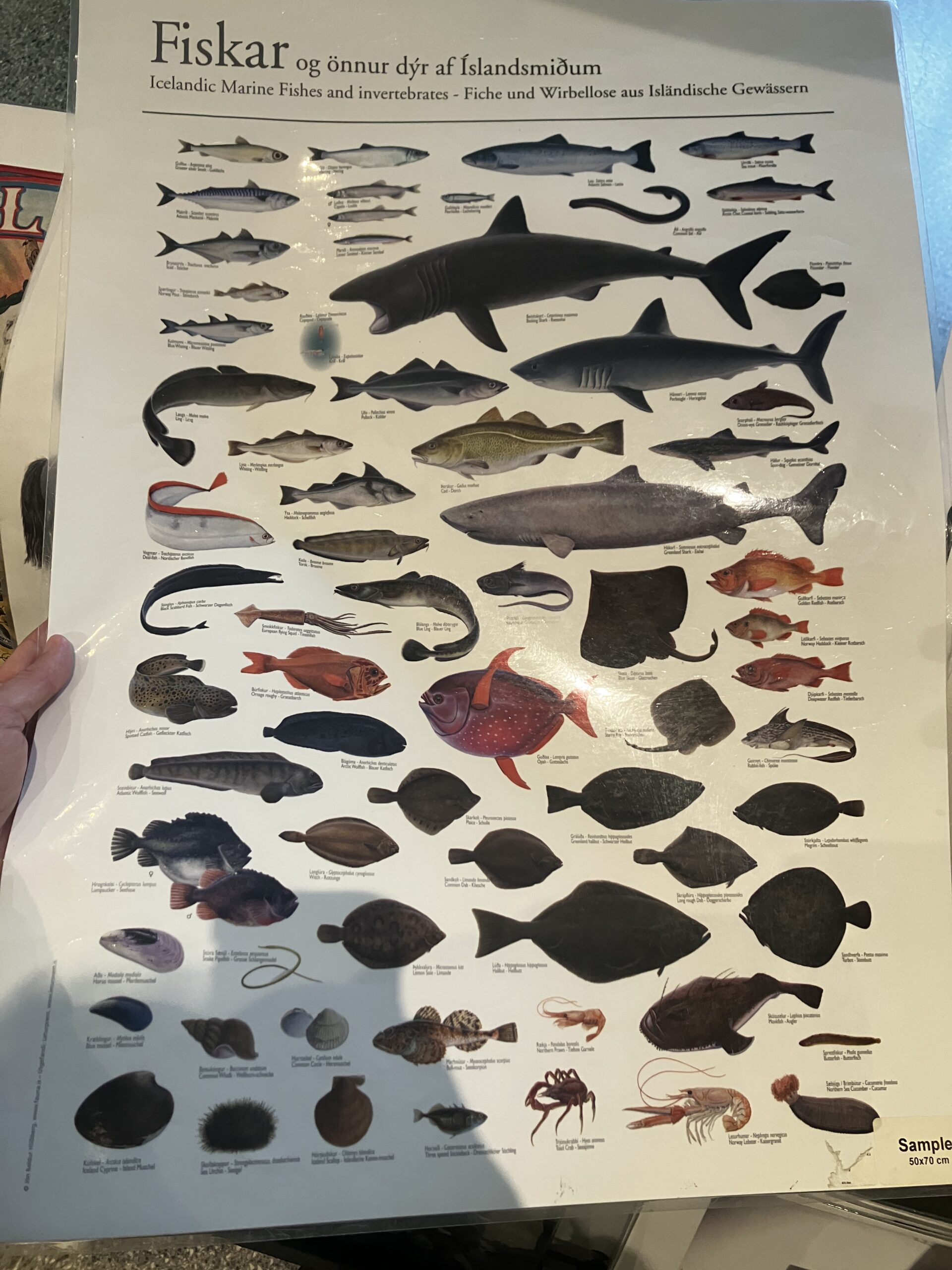
Indeed, one of the biggest challenges we’d faced preparing for the survey was trying to work out exactly what species we might find here. In the days prior, I’d frantically searched through blogs, forums, bookshops, and academic journals for any sort of field guide, and the best I’d found was a fish poster in the gift shop at the National Museum of Iceland. That said, I thought I’d be lucky to even see a fish in these bleak Arctic waters.
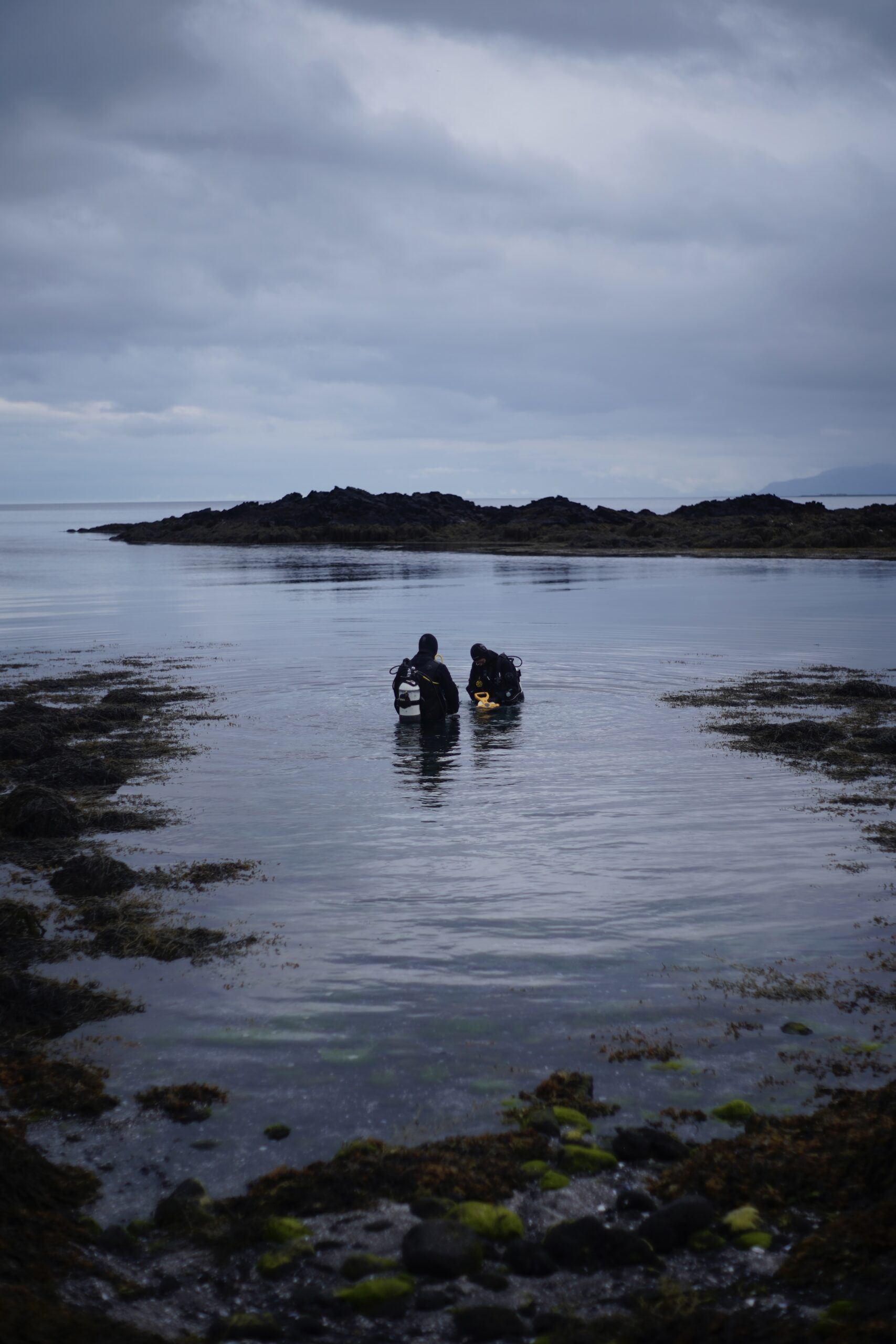
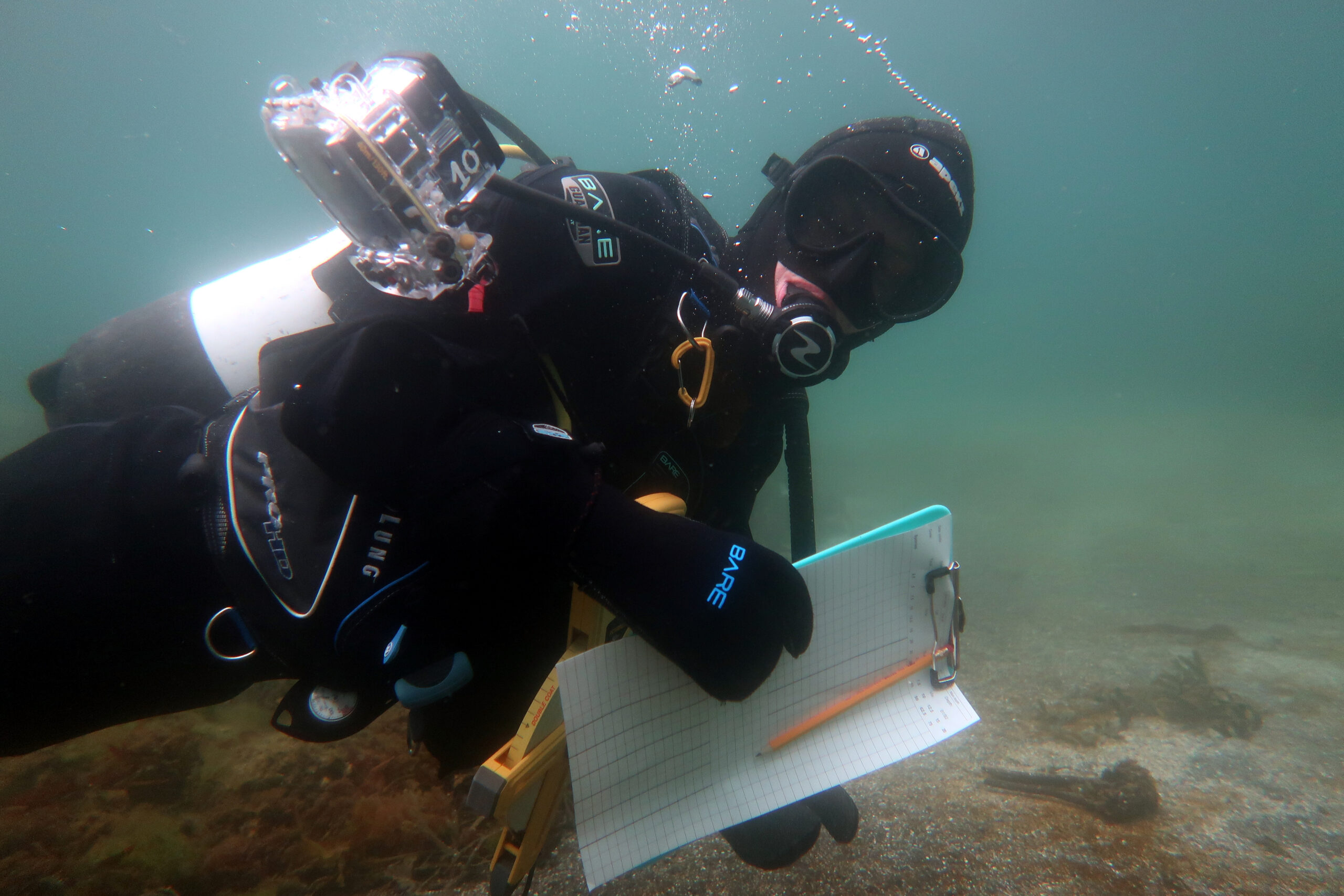
It was 8pm by the time we waded out into the ocean, picking our way between the seaweed-covered rocks with no real idea of what we’d find below the surface. Luckily, the Icelandic summer had brought “mild” conditions, with a water temperature of 8˚C and midnight sun letting us stay out surveying long into the night. And, as we soon discovered, there was good reason to!
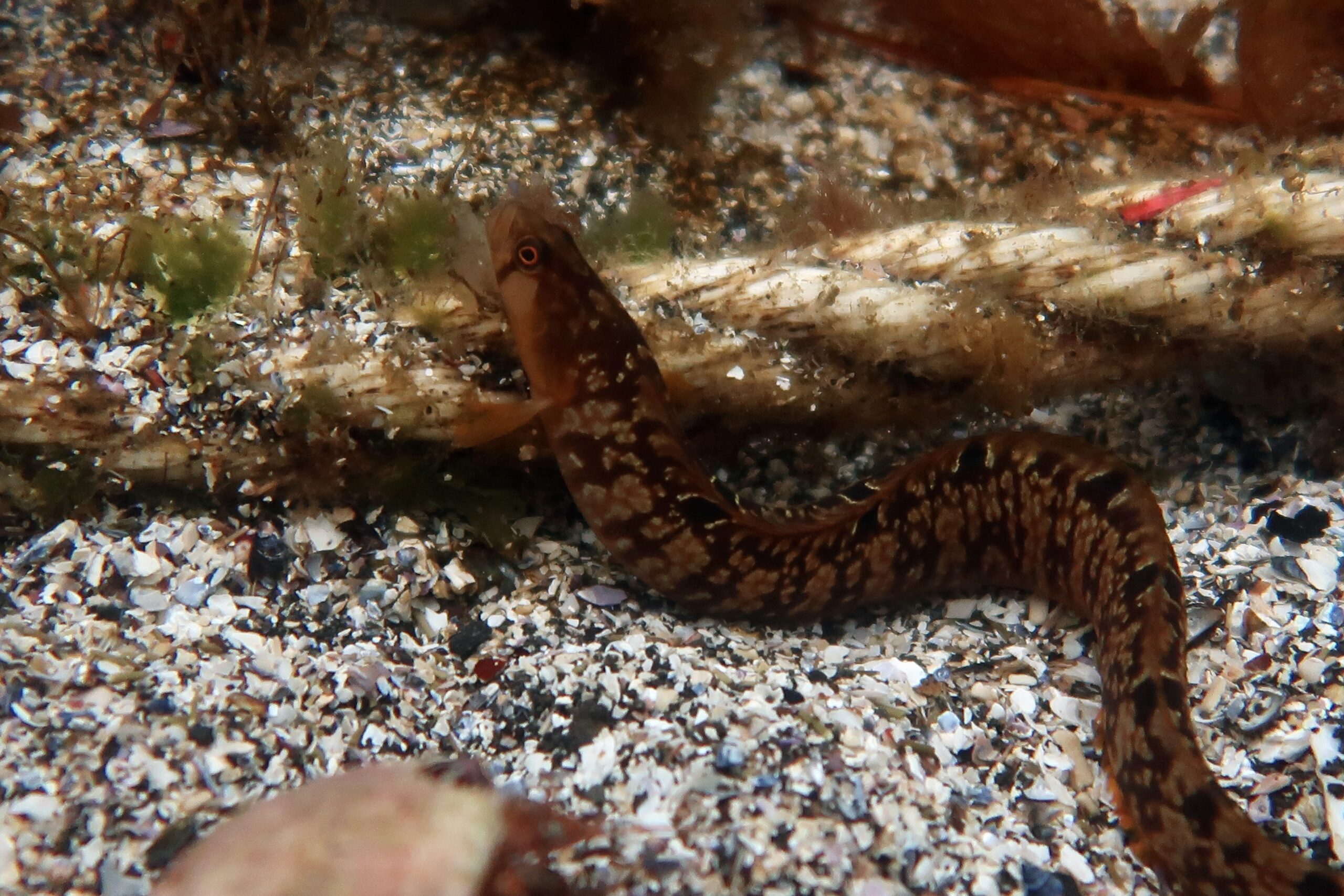
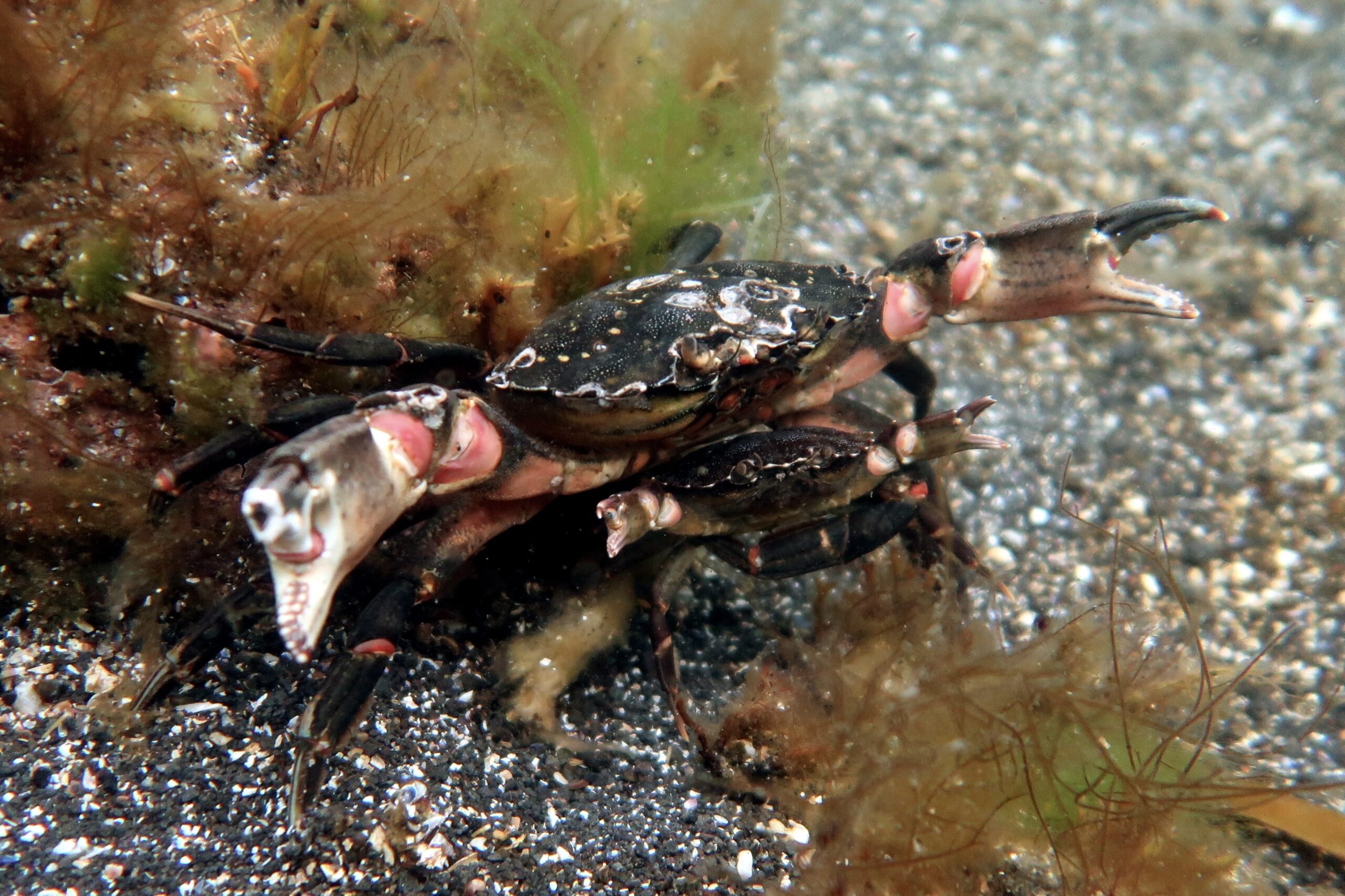
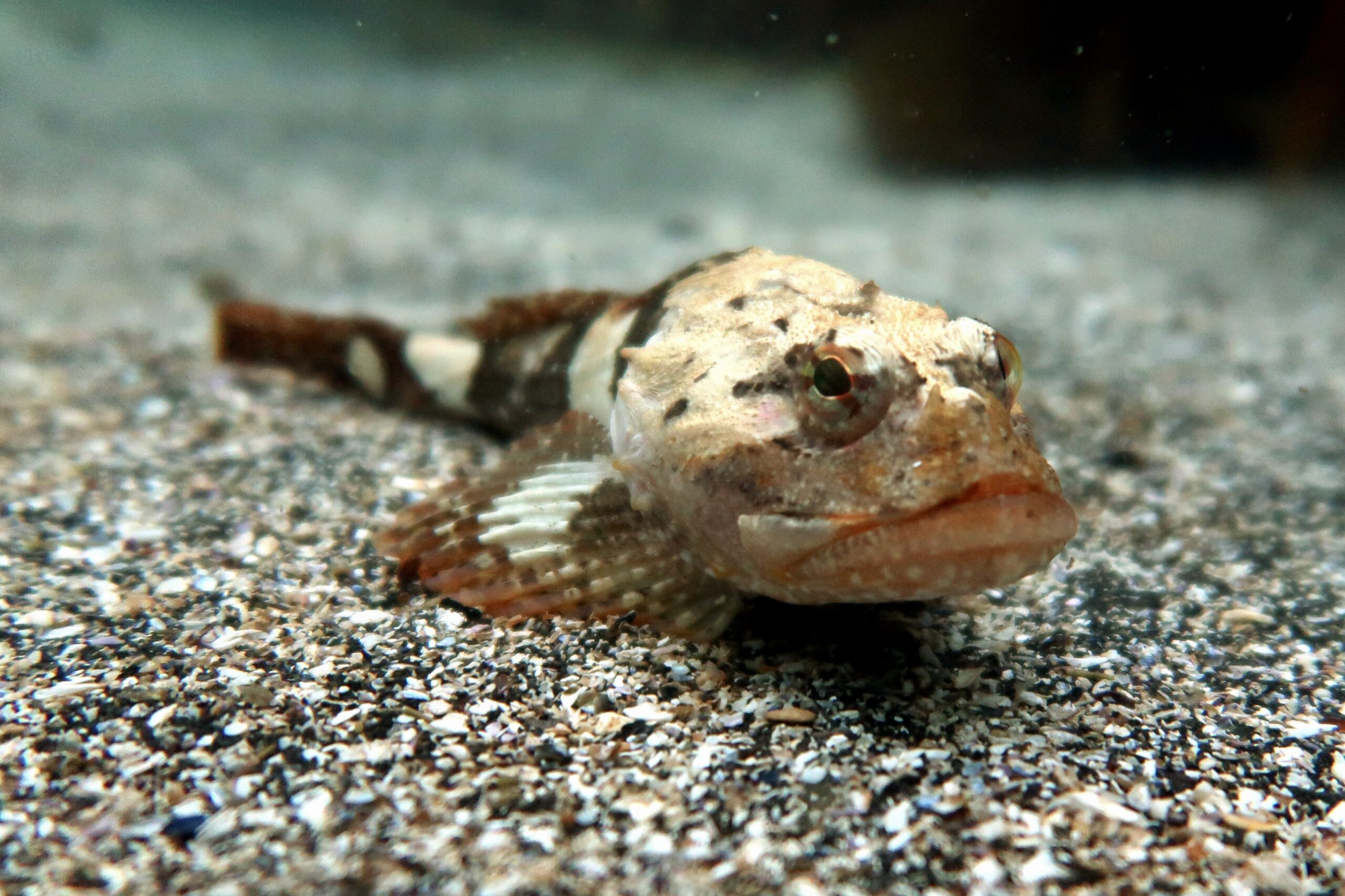
There was so much more action underwater than we expected. In the first few minutes of the dive we started to see Atlantic cod (Gadus morhua) and pollock (Pollachius virens) whizzing around us, while various crabs and a charming rock gunnel (Pholis gunnellus) slunk along the seafloor. Seaweeds covered the warped black rock of ancient lava flows, interspersed with patches of white and black speckled gravel. On almost every patch of sand sat shorthorn sculpin (Myoxocephalus scorpius), unfazed by our goings back-and-forth along the transect.
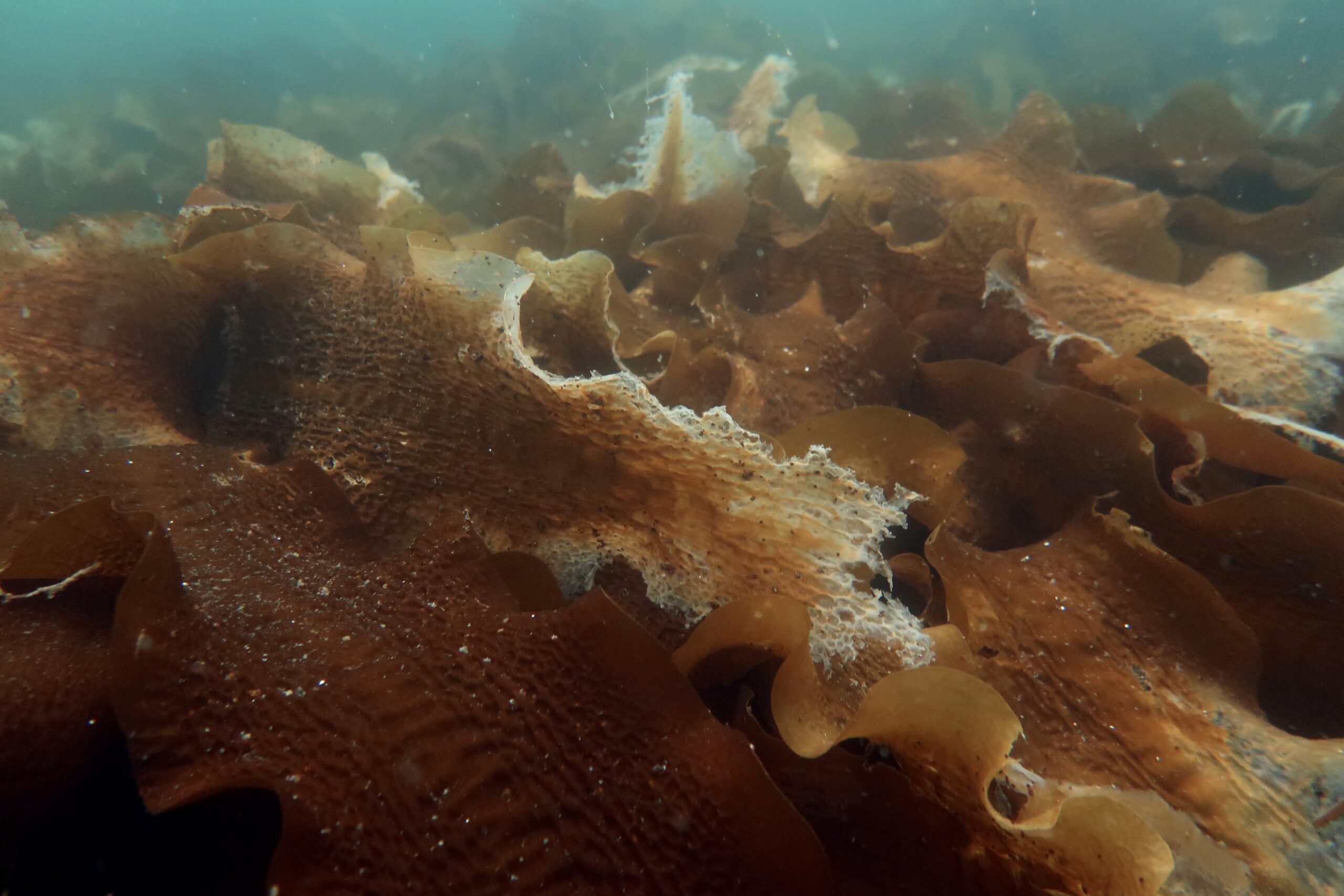
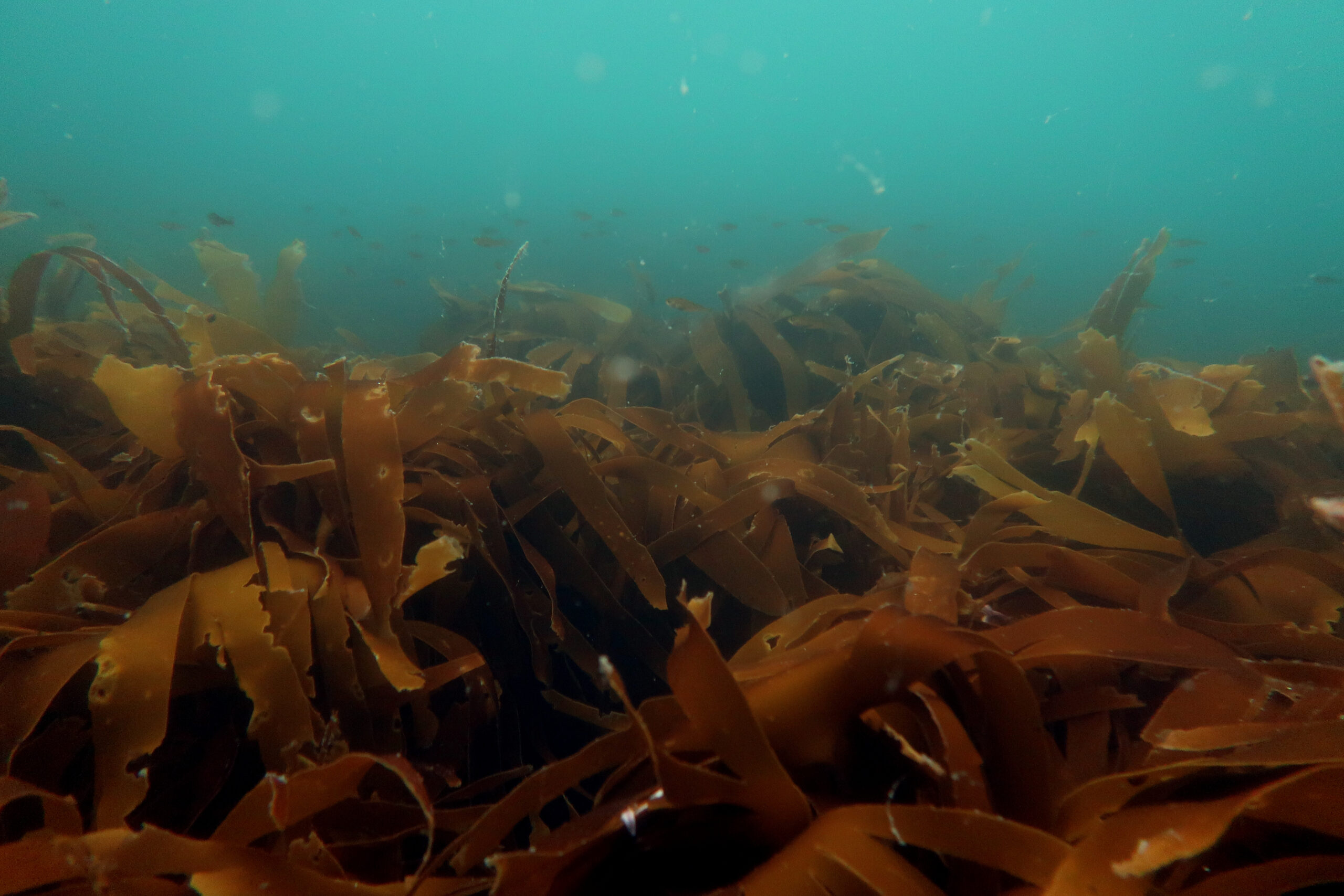
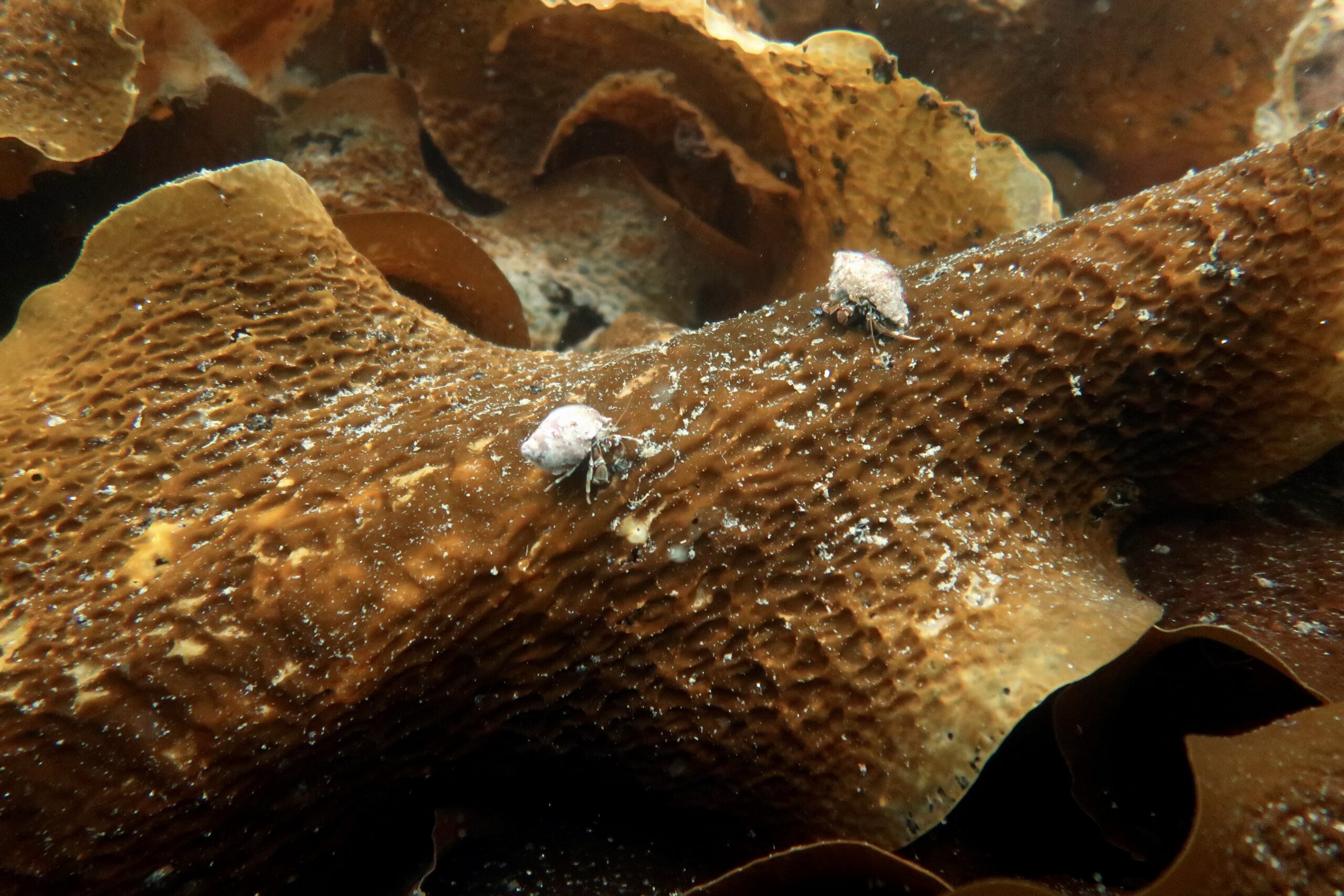
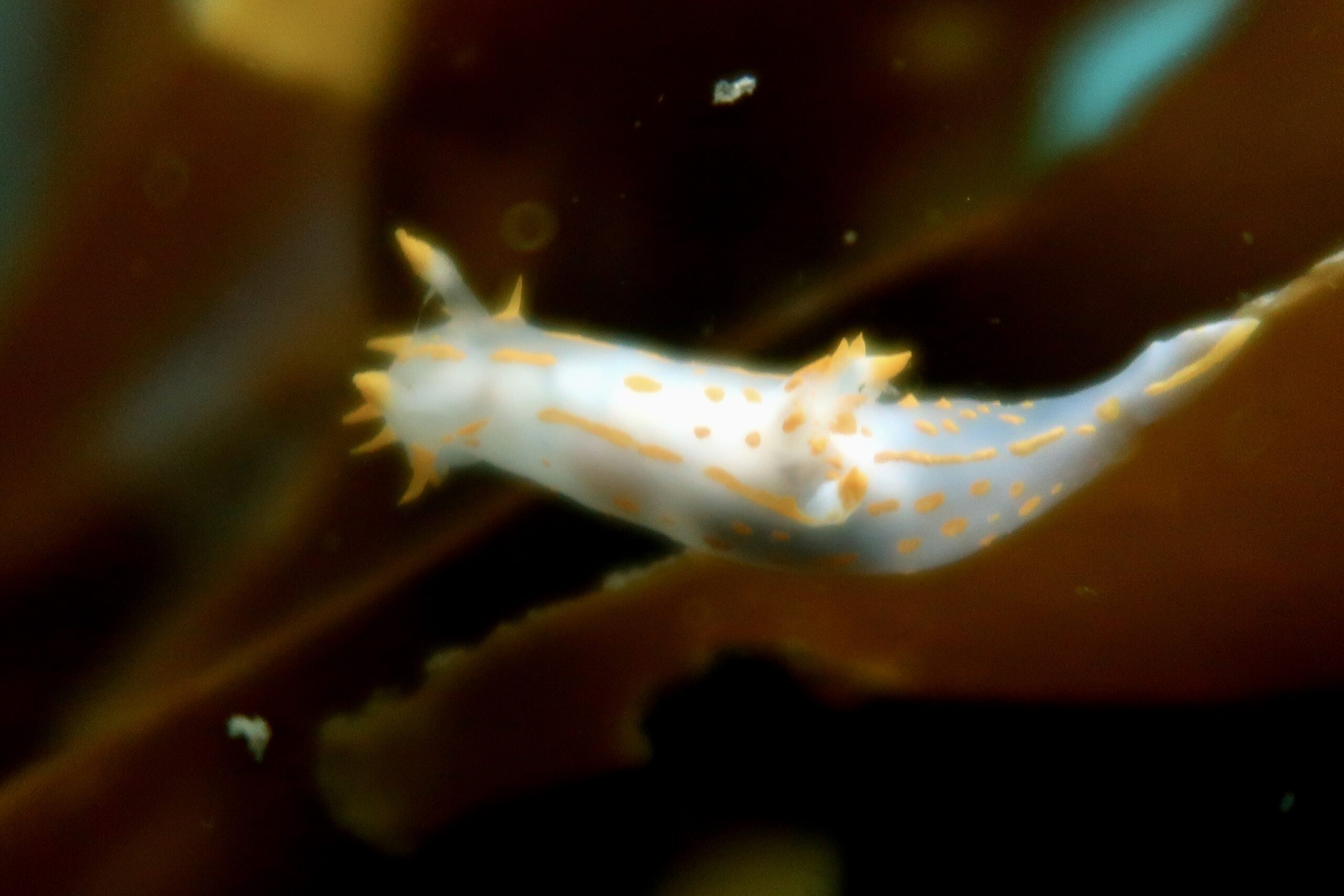
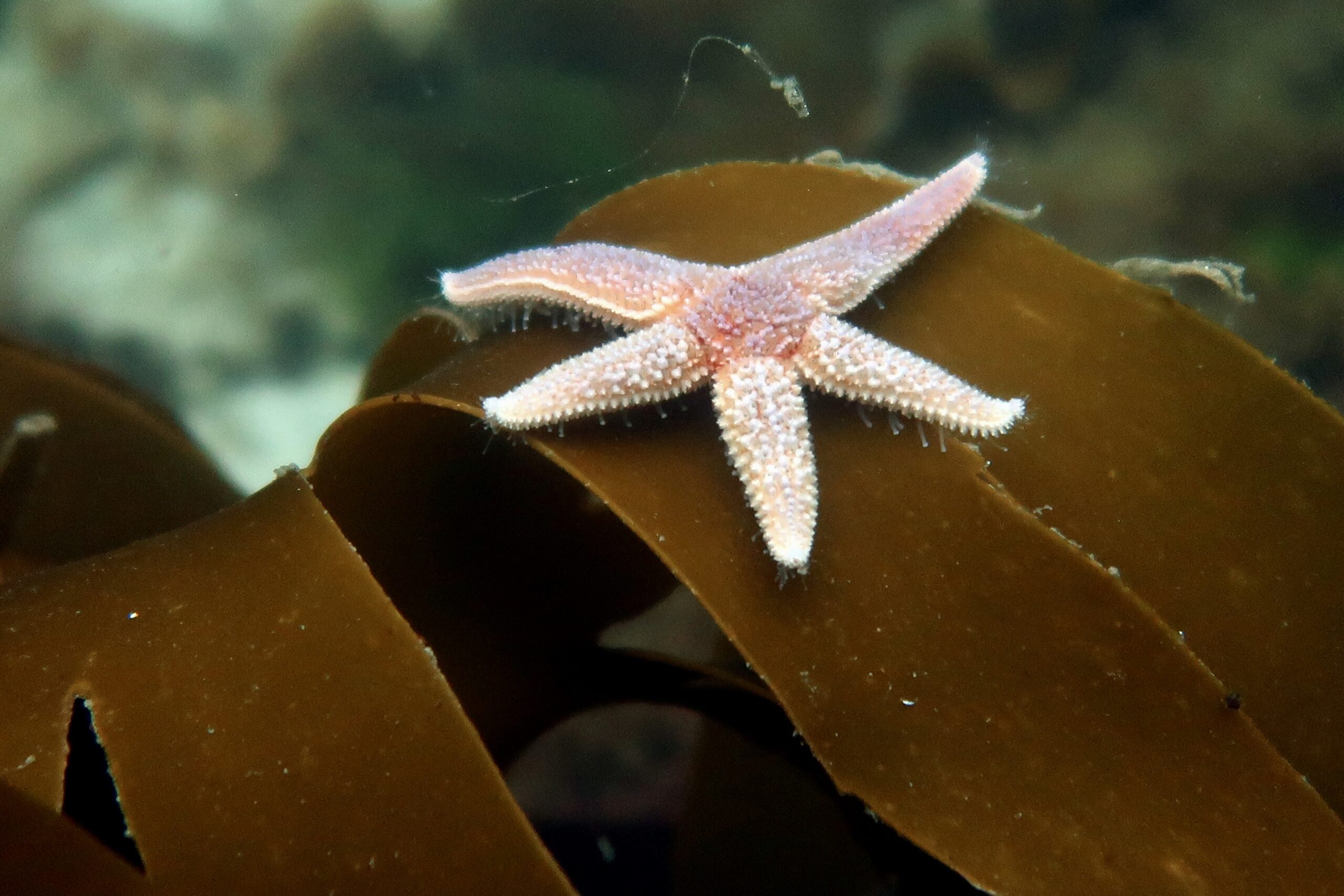
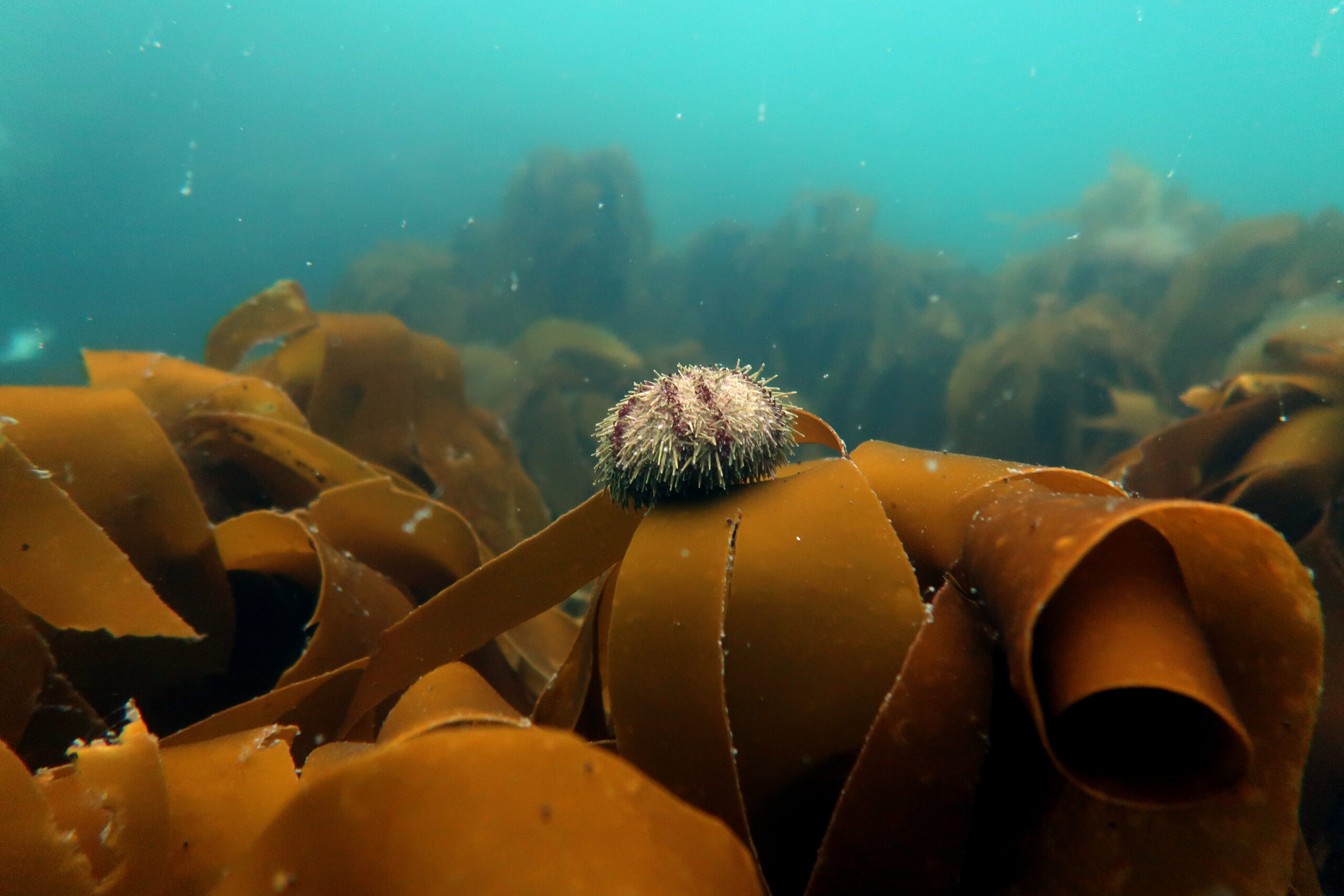
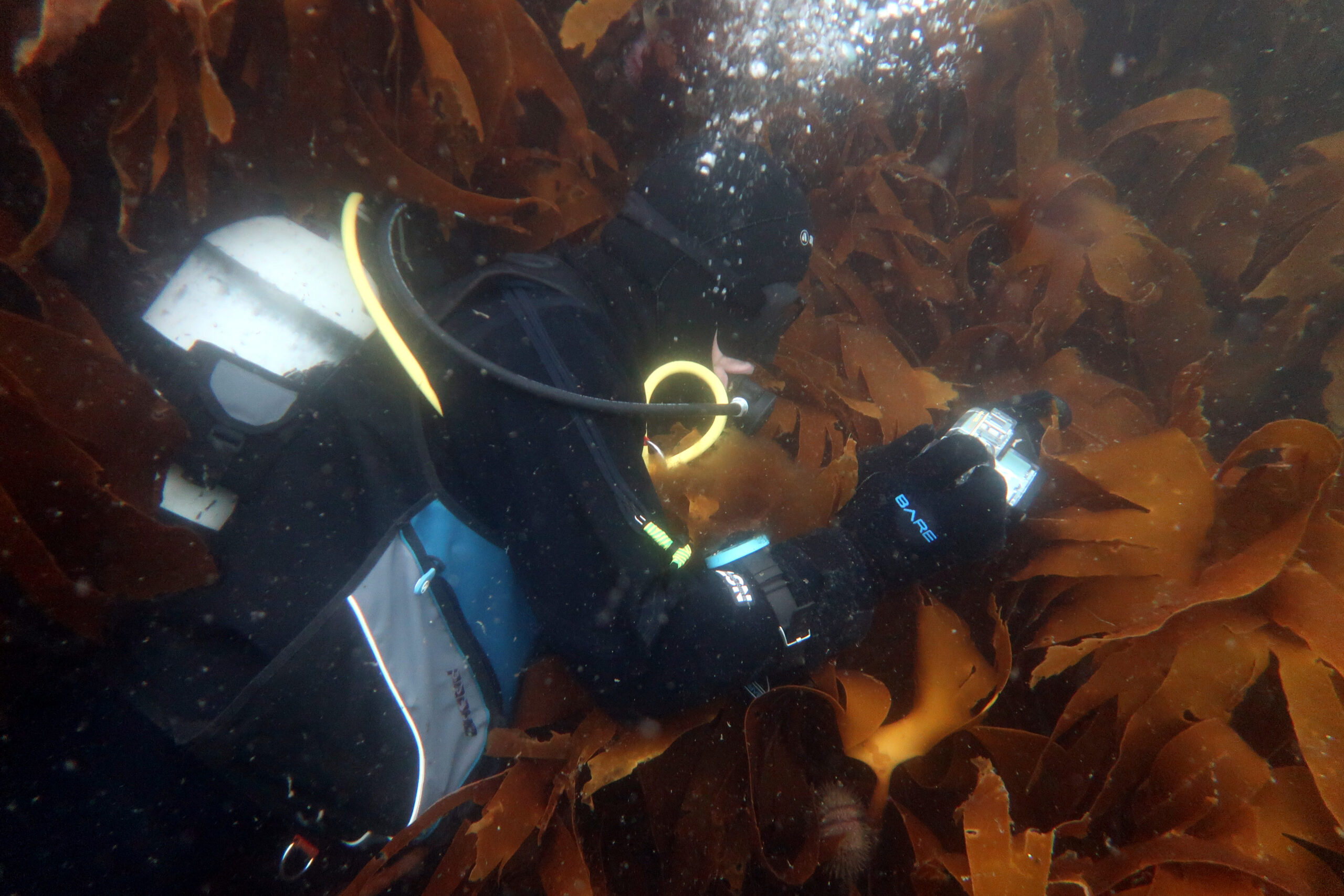
Soon we were properly out amongst the kelp forest, in lush meadows of oarweed (Laminaria digitata), sugar kelp (Saccharina latissima), and dabberlocks (Alaria esculenta). The kelp canopy was riddled with urchins, seastars, hermit crabs, and the odd nudibranch, while the understorey was alive with spectacular brittle stars and whelks. The invertebrate life was really off the charts; we counted literally hundreds of hermit crabs and seastars.
By the time we finished counting crabs and reluctantly reeled in our transect it was 10pm, and the ocean was incredibly calm, the grey-blue glass broken only by our bubbles and a curious harbour seal playing nearby. I had no idea there was so much to find underwater in Iceland and was definitely left wanting more. But my travels were taking me elsewhere, so I bid farewell to Shenae and our trusty transect reel, my delivery mission complete.
An enormous thank you to Shenae for making this all happen, and to Oscar for capturing our mission on camera. Hopefully we’ve broken the ice for many more Icelandic surveys to come!